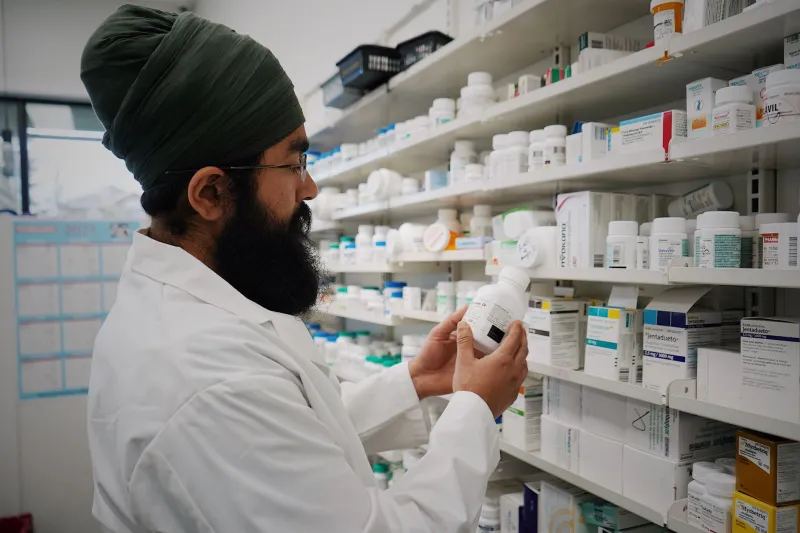
What's Still Sitting in Your Medicine Cabinet Could Be Costing You More Than You Think

The Medicine Cabinet Nobody Wants to Open
Most American households are sitting on a quiet pharmacy of their own. A bottle of antibiotics finished only halfway. A blood pressure medication abandoned after a dosage change. A pain reliever prescribed after surgery that was never touched. A 2021 survey by the American Pharmacists Association estimated that roughly half of all U.S. households have unused or expired prescription medications on hand at any given time.
The instinct to hold onto these medications is understandable—throwing away something that cost $80 at the pharmacy counter feels wasteful. But keeping them carries its own costs, both financial and practical, that rarely get discussed in the same breath as drug pricing or insurance coverage. PharmZip explores what happens when you finally decide to clean out that cabinet—and how to do it in a way that protects your wallet, your records, and your household.
Why Holding On Can Quietly Work Against You
Unused medications sitting in a cabinet are not neutral. They represent a financial decision you made at some point—a copay, a full cash price, a mail-order shipment—and they continue to carry consequences long after the bottle was first opened.
The most immediate concern is insurance refill tracking. Pharmacy benefit managers and insurance carriers monitor refill patterns closely. If your records show that you filled a 30-day supply of a medication every month for six months, but your physician's notes reflect that the prescription was discontinued after month two, that discrepancy can surface during a benefits audit or a prior authorization review. Insurers may question why you continued refilling a prescription that, based on clinical notes, you were no longer supposed to be taking. The burden of explanation falls on you.
Beyond insurance optics, there is the issue of medication security. Prescription opioids, benzodiazepines, stimulants, and sleep aids are among the most commonly diverted household drugs in the United States. The Drug Enforcement Administration consistently identifies the home medicine cabinet as a primary source of prescription drug misuse, particularly among adolescents. Keeping these medications on hand longer than necessary is not merely a storage inconvenience—it is a measurable household security risk.
There is also the practical danger of accidental use. Medications that have passed their expiration date may have degraded in potency or, in some cases, changed chemically in ways that make them less predictable. Taking an expired medication because it is the only thing in the cabinet during a late-night health scare is a scenario that plays out more frequently than most people expect.
Free Disposal Options That Most People Do Not Use
The good news is that getting rid of unused medications has never been easier or more accessible—and in most cases, it costs nothing.
DEA National Drug Take Back Days occur twice a year and allow consumers to drop off unused, expired, or unwanted medications at authorized collection sites, no questions asked. These events are free, anonymous, and available in communities across all 50 states. Dates and locations are published on the DEA's official website well in advance.
Year-round drop-box programs are now available at many retail pharmacies, independent drugstores, and law enforcement facilities. Chains including CVS, Walgreens, and Rite Aid operate permanent disposal kiosks in select locations. These accept most medications—including controlled substances in some jurisdictions—and require no registration or identification.
Mail-back envelopes are a lesser-known option distributed by certain manufacturers and pharmacy benefit programs. These prepaid envelopes allow you to package medications and mail them to an authorized processing facility. Some state Medicaid programs and Medicare Part D sponsors have begun offering these as part of broader medication management initiatives.
For households without access to a nearby drop-box, the FDA recommends a specific at-home disposal method: mixing medications with an undesirable substance such as coffee grounds or kitty litter, sealing them in a bag, and placing them in household trash. This method is generally considered acceptable for most non-controlled substances.
Documenting What You Discard: A Step Most People Skip
Before you drop anything into a disposal kiosk, take five minutes to document what you are getting rid of. This is a step that is almost universally skipped—and one that can matter significantly if your medication history is ever reviewed.
Create a simple record that includes the medication name, dosage, quantity remaining, prescribing physician, and the reason for disposal (discontinued, expired, dosage changed, etc.). A photograph of the label before disposal is even better. Store this in a secure digital folder alongside your other health records.
This documentation serves several purposes. If your insurer ever flags an unusual refill pattern and asks why you filled a prescription that appears to overlap with a later prescription for the same drug class, you have a paper trail. If a pharmacist or prescriber questions whether you were compliant with a previous regimen, you can demonstrate what happened to the remaining supply. In the event of a household insurance claim or a legal matter involving medication access, your records provide a clear accounting.
Can You Recover Any of the Cost?
In most cases, the honest answer is no—once a medication is dispensed and you leave the pharmacy, that transaction is final. Pharmacies are generally prohibited by law from accepting returned medications, even those that are unopened and unexpired, due to federal drug safety regulations.
However, there are limited exceptions worth knowing about.
Some manufacturer patient assistance programs offer partial credits or replacement medications if a product is recalled or if a dosage change is initiated within a specific window following dispensing. These programs vary widely by manufacturer and are not guaranteed, but they are worth investigating if you are discarding a significant quantity of an expensive medication.
Certain mail-order pharmacy programs operated through insurance carriers have policies that allow for returns or exchanges under narrow circumstances—typically when the error was made on the pharmacy's part, such as an incorrect quantity or a dispensing mistake. Review your plan's terms carefully.
For consumers who paid out of pocket using a flexible spending account (FSA) or health savings account (HSA), the original purchase was already made with pre-tax dollars. While you cannot recover the expense, documenting the disposal may support future claims for the same medication under a new prescription.
Making the Medicine Cabinet Work Smarter Going Forward
Cleaning out what you have accumulated is only part of the solution. The other part is building habits that prevent unnecessary stockpiling in the first place.
Before filling any new prescription, check whether you already have a supply on hand from a previous fill. Before agreeing to a 90-day supply or mail-order refill, confirm with your prescriber that the current dosage and medication are expected to remain stable. When your doctor changes a prescription, ask explicitly whether the old medication should be discontinued—and make a note of that conversation.
Using a platform like PharmZip to compare your current medications, track refill timing, and monitor pricing across dispensing options can help you make more deliberate decisions at each step. The goal is not just to find the lowest price at the point of purchase—it is to manage your full medication profile in a way that avoids waste, reduces risk, and keeps your records clean.
The medicine cabinet does not have to be a graveyard of past prescriptions. With the right approach, clearing it out is not just a safety measure—it is a form of financial hygiene.