Mail-Order Pharmacy Promises vs. Reality: What the Brochure Doesn't Tell You
Every year, millions of Americans are nudged—sometimes firmly—by their insurance plans toward mail-order pharmacies. The pitch is straightforward: order a 90-day supply of your maintenance medications, pay less per dose, and skip the trip to the pharmacy counter. For certain patients, that arrangement works precisely as advertised. For others, the experience is a lesson in fine print.
At PharmZip, our mission is to help you find, compare, and access your medications on your own terms. That means giving you an honest accounting of mail-order pharmacy services—not just the headline savings figure, but the full cost picture.
The 90-Day Math: When It Actually Adds Up
The core financial argument for mail-order is unit cost. Many insurers and pharmacy benefit managers (PBMs) incentivize their mail-order affiliates with lower copays for 90-day supplies compared to three separate 30-day fills at a retail location. On a stable, long-term medication like a blood pressure drug or a cholesterol-lowering statin, the savings can be genuine—sometimes $20 to $50 per quarter for a single medication.
If you take three or four such medications, those savings compound meaningfully over the course of a year. For this specific profile—a patient with well-managed chronic conditions, predictable refill schedules, and medications that aren't sensitive to temperature—mail-order can deliver real value.
The problem arises when that profile doesn't match your situation, and the marketing assumes it does.
Fees That Don't Make the Headline
Mail-order pharmacies are not uniformly transparent about their full fee structure. Depending on the service and your insurance plan, you may encounter:
- Shipping fees that apply to certain tiers of medications or expedited delivery requests
- Handling charges embedded in copay calculations that aren't itemized separately
- Plan-mandated exclusivity rules that penalize you financially for continuing to use a retail pharmacy after a certain number of refills—even if you prefer it
- Prior authorization delays that are more cumbersome to resolve remotely than in person
Some insurers now require mail-order for maintenance medications after the second or third retail refill, effectively removing consumer choice. If you fill a prescription locally after that threshold, you may pay the full out-of-pocket price rather than your copay. That is not a savings feature—it is a structural mandate dressed as one.
The Emergency Refill Problem
Consider what happens when you run out of a critical medication unexpectedly. Perhaps you miscounted your pills, traveled longer than planned, or a dose was dropped and lost. At a local pharmacy, this is often a same-day resolution. Your pharmacist can contact your prescriber, and many states allow pharmacists to dispense an emergency supply of certain medications without waiting for a new prescription.
With a mail-order pharmacy, that flexibility largely disappears. Standard delivery takes three to seven business days. Even expedited shipping adds cost and is not guaranteed to arrive before a patient misses doses. For medications where continuity matters—antidepressants, thyroid hormones, anticoagulants, immunosuppressants—a gap of even a few days can carry clinical consequences.
This is one of the most underappreciated risks in the mail-order model, and it rarely appears in the promotional materials.
What Happens to Your Medication in Transit
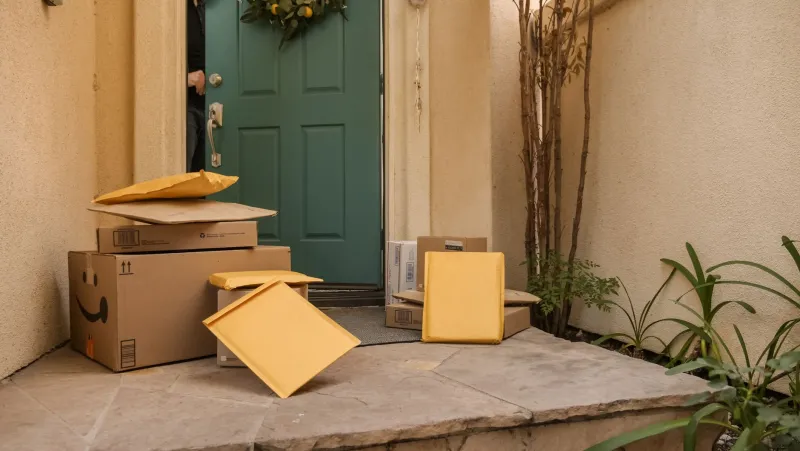
Pharmaceuticals are not indestructible. Many medications have specific storage requirements, and a package sitting in a delivery vehicle or on a sun-exposed doorstep for hours does not meet those requirements.
Insulin is the most frequently cited example—it must remain refrigerated and is particularly vulnerable to heat. But the issue extends further. Certain antibiotics, some psychiatric medications, and various biologics can degrade when exposed to temperature extremes. Summer months in states like Arizona, Texas, and Florida create especially high-risk conditions for mailed medications.
While many mail-order pharmacies use insulated packaging and cold packs, those measures have time limits. A package that sits unattended for an afternoon in July may arrive chemically compromised with no visible indication that anything is wrong. Patients who take degraded medication may experience reduced efficacy without understanding why.
When Local Pharmacies Offer Better Value
Retail and independent pharmacies have competitive tools that mail-order services cannot easily replicate. Discount programs, manufacturer coupons, and third-party savings platforms can sometimes price a 30-day retail supply lower than a mail-order copay—particularly for generic medications.
PharmZip's comparison tools allow you to search medication prices across multiple dispensing sources in your area alongside mail-order options, so you are not relying on your insurer's preferred framing to make the decision. In many cases, a GoodRx-style coupon at a neighborhood pharmacy beats the mail-order price outright, with the added benefit of same-day access and a pharmacist you can speak with face to face.
Independent pharmacies, in particular, often have more flexibility to work with patients on pricing and are not bound to the same PBM contracts that shape mail-order formularies.
A Framework for Deciding What Is Right for You
Mail-order pharmacy is not inherently good or bad. It is a tool, and like any tool, its value depends on how well it matches the job at hand. Use the following questions to assess your situation:
- Is the medication stable and long-term? If you have been on the same dose of the same drug for a year or more, mail-order is lower risk.
- Is the medication temperature-sensitive? If yes, review the mail-order pharmacy's cold-chain protocols carefully, and consider your climate and typical delivery conditions.
- Do you have a history of emergency refill needs? If you frequently miscalculate supply or travel unpredictably, local access may be worth a higher unit cost.
- Have you compared the actual out-of-pocket cost? Do not assume mail-order is cheaper. Use a comparison tool to verify before committing.
- Are you being required to switch, or choosing to? If your plan is mandating mail-order, understand your appeal rights and whether exceptions exist for your specific medications.
The Bottom Line
Mail-order pharmacies occupy a legitimate place in the American prescription landscape, and for the right patient with the right medications, they deliver on their promise. But the promise is conditional—and those conditions are not always disclosed upfront.
Before accepting a switch to mail-order as a straightforward upgrade, take the time to run the actual numbers, assess your medications' storage needs, and consider what emergency access would look like under that model. PharmZip exists precisely to give you the tools to make that evaluation with full information rather than assumptions. Your medication costs should reflect your circumstances—not a default setting chosen by your insurer.